

What Is An Alternative To Animal Testing
Animal Testing Alternatives (Ultimate Guide)
Animal testing is used around the world – mainly for educational and scientific advancements. Although it can be benign (for the institutions), it is often inhumane and threatens bones creature rights. Luckily, there are several alternatives to animate being testing that we can utilize instead.
The most prevalent animal testing alternatives are figurer models, cell and tissue cultures, HPS, and fifty-fifty human volunteers. For educational institutions, the platonic culling choice is the use of human-patient simulators when possible. There are as well some instances where culling organisms similar fungi and protists can exist used.
Incorporating these alternatives tin really limit the number of animals we test on worldwide. Read on to acquire more virtually how each of these alternative testing methods would work and their benefits. We'll also look at why most nations haven't transitioned abroad from animal testing despite the availability of these alternatives.
What Are the Culling Options for Animal Testing?
Contrary to belief, animal testing isn't the only option for companies and institutions to ensure product safety and advance scientific and educational knowledge. Oh yes – there are far more toll-effective, fourth dimension-efficient, and humane options out in that location. Each one renders these cruel and outdated animal testing methods unnecessary.
Thanks to modern technology and innovations, there are several optimal alternative options to animal testing that any institution or visitor could employ. Hither are the top alternatives we've found, their uses, and their overall benefits.
Figurer Models
Computer technology has avant-garde a great deal in the past two decades – to the bespeak where researchers tin at present use advanced calculator models to simulate human biology. This is specially used to understand the progression and development of known and new diseases.
These models, paired with advanced computer software, can besides assistance scientist develop new medicines. They tin decide potential biological and toxic effects of a tested substance or product without referring to test results from a living being.
This is extremely beneficial to the world of animal testing. It eradicates the necessity of animals for safety testing of standard drug tests and exploratory research. Both of which are responsible for a significant number of overall tests conducted in nations worldwide.
At that place are several innovative and invaluable software and computer-based techniques utilized in this alternative form of testing.
Use of the CADD Software
Researchers utilize the Computer-Aided Drug Blueprint (CADD) software to accurately predict the effectiveness of a drug within the body and limit the testing of unnecessary chemicals that have no biological benefits.
Although it would be platonic for this culling to replace animate being testing, at that place are cases where it can slowly be incorporated into an institution every bit the form of preliminary testing. This is mainly to confirm a potential drug is rubber.
Even if information technology doesn't completely eradicate creature testing, it will significantly reduce the number of animals used overall.
The Quantitative structure-activity relationships (QSARs) Technique
The quantitative structure-activity relationships (QSARs) are computer-based techniques that are highly influential in the world of drug and product testing. They make sophisticated estimates of how hazardous a substance is likely to exist.
The QSARs reduce the necessity of testing chemicals with unknown biological effects on animals. This method is besides much more than time-efficient and is relatively inexpensive versus the care needed for test animals.
In Vitro and Ex Vivo Testing

There are two means that cells and tissue can be acquired and used in cultures for animal testing alternatives, in vitro and ex vivo.
In vitro directly translates to "in glass". Basically, information technology means that biological thing, such as cells and tissue, are used for experimentation outside of a living organism. In about cases, these experiments are conducted in a glass instrument, like a petri dish.
The cells and tissue used for in vitro experimentation can be created or grown artificially. This is the main departure that separates it from the ex vivo experiments, where the cells or tissue are directly acquired from a living being.
In vitro and ex vivo testing are highly influential alternatives to animal testing, but in vitro jail cell and tissue cultures arguably are the virtually ethical, constructive, and useful option.
In Vitro Cell and Tissue Cultures Testing
To deport these experiments, various cells or tissues, typically human being, are placed into a controlled environment for a set time. This could exist a few days or every bit long equally months.
During this time, the isolated cells will grow independently from each other and can be used for various purposes, such as determining the toxicity and efficacy of potential drug molecules/chemicals through preliminary screenings.
Because the cells used for these experiments mimic the structure and role of man organs and/or organ systems, researchers can more accurately determine the potential side effects of new chemicals and substances without exposing them to a living test subject first.
Examples of prison cell cultures
I of the almost compelling examples of this alternative is the use cultures from a cow's cornea to replace the Draize examination. In a three-calendar week period, this civilization allows testers to decide if a production could crusade eye irritation in humans versus.
This is so much more humane than the standard Draize test, which straight places the foreign substance in an brute's eye. Rabbits are near frequently used hither. And the facts can't be ignored – this form of experimentation is typically very painful for the animal, time-consuming, and involves a meaning amount of resource since a new beast must exist used for every exam.
And this is just i example of how these in vitro tests can eradicate crude and unnecessary animal tests. For example, MatTek Life Sciences uses the EpiDerm™ Tissue Model, which reflects the previously mentioned example to supervene upon rabbits in heart irritancy experimentation.
Vitrocell
VITROCELL, a German-based manufacturer, has created several devices that allow them to expose human lung cells to chemicals through in vitro testing to determine potential health side effects of inhaled substances.
The results would be so beneficial to research on cigarette smoking besides as modern alternatives like east-cigarettes – or even unintentionally inhaled substances similar pesticides.
This form of experimentation tin can eliminate the need for testing toxic substances on rodents through forced tube inhalation while in a bars space. Not only is this type of experiment highly uncomfortable for the animal, but it tin can also take various negative mental and physical side-furnishings. Sometimes the exam is conducted for hours on stop until the beast is eventually killed.
Although some tests will accept longer using in vitro testing than animal testing considering the cultures must grow and react, they are far more humane than the painful, uncomfortable, and potentially fatal tests conducted on animals.
Not too long ago, The Humane Society released an award-winning blithe curt film featuring stars like Zac Efron. The point of the video was to get the chilling facts about animate being testing across and we recollect it's definitely worth a watch. Read on here for the link: 10 Facts About Animal Testing You Need to Know (2021)
Human Volunteers
Another prominent alternative to animal testing is the use of homo volunteers through a method known equally microdosing.
The goal of microdosing is to introduce an experimental drug into the system of a human being in a modest i-time dose to ascertain how it metabolizes through the body and what the potential result would be on a larger calibration when the dosage is increased.
The dosage is and so depression that they are unlikely to cause a "whole body" effect to the human volunteer. Still, enough is introduced to incite a cellular response monitored through sophisticated imaging techniques.
Microsdosing allows testers to determine which chemical, substance, and potential medications are compatible with the man body through straight testing it on the homo system so they tin skip the pace of testing it on animals first entirely.
Another way that human volunteers tin be utilized versus animal testing is past monitoring the progression and effects of a particular handling or disease through encephalon imaging.
Significant technological advancements have resulted in highly efficient brain imaging machines that allow researchers to get an accurate, in-depth look into a patient'south encephalon functions and structures. These instruments are monumentally influential in many fields only play a significant role in microdosing experiments also.
Non only can researchers test potential treatments on consenting patients and rails their furnishings through their brain scans, but they can as well induce temporary and reversible brain disorders using transcranial magnetic stimulation. The results of these experiments are invaluable to understanding how the encephalon functions, what causes certain disorders, and how or if they can exist treated.
Homo-Patient Simulators

A meaning number of tests conducted on animals are actually intended for educational purposes and run by institutions such as colleges or grooming programs within hospitals and other like facilities.
Although these tests are typically non-invasive, it doesn't mean humanity shouldn't strive to utilize alternatives when applicable to limit equally much brute testing as possible.
Researchers tin can reduce the number of animals used in educational tests by utilizing man-patient simulators (HPS) instead.
These advanced pieces of technology are often used in healthcare settings where nurses, doctors, and other like professions are taught how an actual human would react when faced with diverse physical ailments and traumas.
An exceptional example of an HPS is the TraumaMan simulator, which is an anatomically correct, computerized HPS that tin simulate various human being functions and reactions, such as:
TraumaMan is typically used to allow students to exam surgical procedures, only it can ultimately exist used in various healthcare training environments. In add-on to HPS, many institutions now utilise virtual reality technology, figurer simulations, and other animal testing alternatives to supplement their teachings for accurate, easily-on learning.
Although several countries, such equally the U.Southward., Canada, and India, have completely incorporated HSA technology into their institutional training, many nations withal permit the use of animals instead.
In fact, both the U.S. and Canada fal l within the peak 5 countries that exam on animals the most. But for the total listing of countries that are still to animals, read on here: What Countries Are Cruel to Animals in 2021?
This ways students will dissect or practice procedures on animals that are nearly anatomically similar to humans to accept first-hand exercise before assisting human patients. Sometimes these animals are deceased earlier these experiments, while in other instances, they are alive for a more accurate experience. Whether the animal is permitted anesthetics or lives beyond the process varies.
The technology used for HPS tin be costly. Only equally they go increasingly accurate in their anatomy and responsiveness, they quickly brand the utilize of animals in professional tests and experiments utterly unnecessary, and in most cases, outdated.
Alternative Organisms
For the virtually part, animal testing is conducted on sentient beings, typically higher model vertebrates, such as republic of guinea pigs, rats, monkeys, rabbits, and others. The fact that these animals can feel pain, pleasure and experience mental, physical, and emotional distress renders them a less than ideal candidate for testing potentially harmful or fifty-fifty fatal products and medications.
However, many researchers argue that in that location is no way to accurately determine the effects of these chemicals and substances without introducing them to a living existence's organization reflects humans.
Although many don't support creature testing methods, it is widely agreed that human testing, particularly on unwilling hosts, is highly unethical. Fortunately, in that location are ways to introduce these substances to a living beast without existence human or sentient.
It might not exist the about common alternative, simply in that location have been proposals to use alternative organisms to replace animal testing.
Many of these organisms can accelerate human agreement of molecular and genetic studies and cellular differentiation. While nearly of these alternative organisms would be used for enquiry purposes rather than testing medical or corrective products, there are still viable options for fauna testing.
Limitation to Pre-Approved Ingredients for Products
This option might not come to mind immediately when debating animal testing alternatives, but it is certainly viable.
Throughout countless years of experimentation and research, at that place is a long list of chemicals, substances, and ingredients that have been approved and deemed safe for homo utilise in a multitude of products and medications.
Although there are certainly benefits to testing new chemicals and substances, especially for medical purposes, there are circumstances where it is simply unnecessary. Companies could hands opt for using ingredients already proven to exist prophylactic and don't require any form of boosted testing, creature or otherwise.
Nonetheless, many companies will continue to test the boundaries of product ingredients, often for cost or to create a more competitive or effective product. In reality, a product fabricated with pre-approved ingredients would be just as beneficial and eliminate the necessity of additional testing.
This could essentially diminish the number of animals subjected to testing, particularly in the cosmetics industry, where companies reside in countries that don't officially ban this form of testing for cosmetic products.
There is certainly something to exist said for expanding human cognition, but there are many circumstances regarding animal testing where information technology only isn't necessary. Pre-approved ingredients are an option.
They would often salvage companies a vast amount of time, coin, and resources they would waste product on additional testing if they opted for a more unknown and innovative alternative.
Why Hasn't Animal Testing Been Replaced?
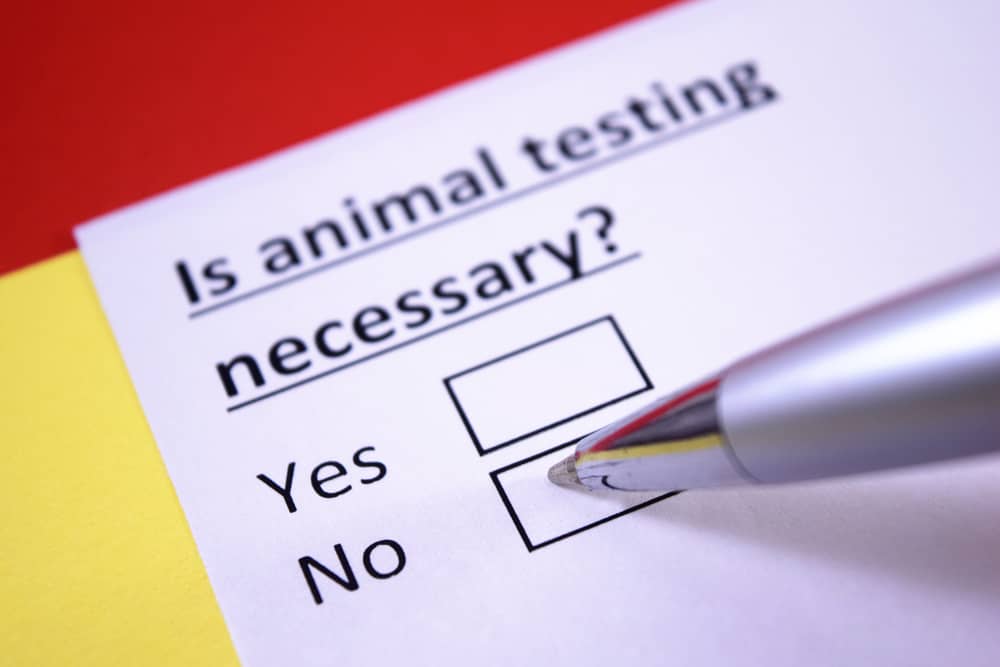
Despite the countless innovative and equally effective alternative methods to animal testing, the number of tests and experiments conducted with animal subjects has increased in many nations.
Considering the significant upstanding issues surrounding animal testing, it tin seem casuistic that more animals would be used for research and experimentation despite more humane options being available.
So why aren't more nations transitioning more towards these alternatives and leaving animal testing behind?
Most people like to assume companies stick to animal testing to save money rather than purchasing pricy tools and equipment, like HPS or avant-garde computer software. In reality, animal testing is actually more than expensive than these alternatives in most cases because companies and institutions must constantly intendance for the animal even during experimentation.
When they are non provided with life-sustaining care earlier testing, they are supplemented with proper medication and anesthetics during experiments, depending onits severity, to adhere to the principles of the 3R's and non cause unnecessary suffering to the animal.
The cost of care and medication for the vast number of animals used for testing quickly adds up and outweighs the cost of alternatives.
The true reason why animate being testing is still applicable and widely used today is that the scientific customs agrees that no alternative is every bit constructive and accurate every bit animate being testing that could ultimately replace this method.
Although the alternatives we have mentioned can come up close to the results and insights of animal testing, they aren't enough to replace information technology birthday because they can't provide specific testing results on a living, whole-body system.
Many programs can make extremely insightful predictions, and microdosing might provide insight on potential effects on a pocket-sized calibration. Still, none of these tin truly reveal the effect of new medications or products on a scale as large as a homo's entire biological organization.
Until an alternative arises that can practice this to a degree equal to or greater than animal testing. Then this controversial method volition remain.
Last Thoughts
There is certainly promise that fauna testing volition one twenty-four hours go completely outdated and irrelevant in the world of science every bit human innovation breeds more than efficient and advanced alternative methods.
A substantial amount of progress has already been made with creating the alternatives mentioned here. However, at that place is still a long way to go before companies and institutions are truly prepare to allow animal testing die out.
In the meantime, increased use of pre-existing alternatives can aid significantly reduce the number of animals used for testing until nosotros can notice that alternative that volition render animal testing irrevocably unnecessary.
Source: https://crueltyfreesoul.com/animal-testing-alternatives/
Posted by: palacioscaved1966.blogspot.com
0 Response to "What Is An Alternative To Animal Testing"
Post a Comment